
I have recently been fascinated by a monkey.
Not just any monkey. A baby Japanese macaque named Punch, sometimes also referred to as Punch-kun, who has become internet famous. If you have not been following his story, he was born at the Ichikawa City Zoo near Tokyo in July 2025 and was abandoned by his mother shortly after birth, so zookeepers stepped in to hand-raise him.
To help him develop instinctive clinging behavior and provide emotional comfort, caretakers gave him an IKEA Djungelskog orangutan plushie — which Punch quickly began treating as a surrogate maternal figure. In footage that went viral worldwide, he is often seen clutching that plushie for comfort, carrying it everywhere, and returning to it after moments of stress or social difficulty with other macaques. The plushie has been nicknamed “Oran-Mama” online because Punch appears to treat it as a stand-in for the comfort and security normally provided by a mother.
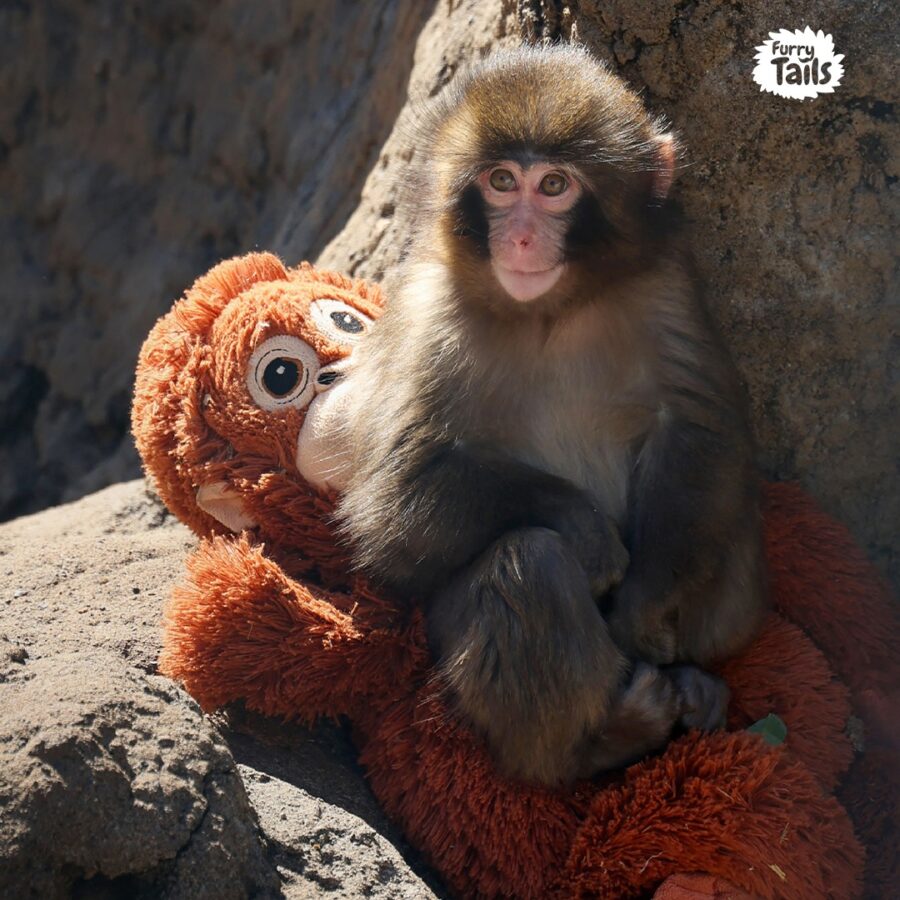
And people cannot stop watching him.
This got me thinking: why are so many of us invested in following this monkey? Why do thousands of strangers feel compelled to comment, share, and narrate his imagined inner life? Why does a monkey with a plush toy make us pause mid-scroll?
The answer is not about novelty. It is about empathy.
The Quiet Hunger to Be Understood
Empathy is the ability to sense and share the feelings of another. It is the internal bridge that allows one nervous system to resonate with another. Yet most people walk through daily life feeling partially unseen.
Even in busy workplaces.
Even in families.
Even in high-performing leadership teams.
There is a subtle loneliness in being misunderstood or unrecognized. When we see Punch holding that plushie, something activates. We project. We imagine comfort. Attachment. Security. Maybe even vulnerability.
We recognize something familiar in him.
The internet’s fascination is not about the monkey. It is about us. We see a small being holding onto something that appears to matter deeply to him. That image mirrors our own attachments—to people, to symbols, to things that ground us.
Empathy makes the image meaningful.
Empathy as a Talent: Why We Do Not All Experience It the Same Way
From a Gallup strengths perspective, empathy is not evenly distributed. Some individuals lead with Empathy as a dominant talent. For them, Punch’s story likely feels visceral. They may sense emotion in the image without needing explanation. They intuit mood shifts. They respond immediately to perceived vulnerability.
For someone with high Empathy, the monkey is not cute. He is felt.
But others may respond differently.
• Those high in Analytical may wonder about conditioning or environmental triggers.
• Those high in Strategic may consider how the story spreads and why it captures attention.
• Those high in Ideation may delight in the symbolic contrast between wild animal and manufactured toy.
• Those high in Input may collect facts about macaque behavior.
• Those high in Intellection may contemplate what this says about projection and anthropomorphism.
Empathy does not disappear in these individuals. It is filtered.
Gallup’s framework reminds leaders that talent themes shape how stimuli are interpreted. Two people can observe the same monkey and experience entirely different internal responses. One feels tenderness. Another sees a social phenomenon. Both reactions are authentic.
Empathy is universal. Its expression is individualized.
Projection, Storytelling, and Shared Humanity
Punch becomes a canvas. The internet writes stories onto him. “He needs comfort.” “He loves his mama.” “He is protecting his mother.”
Humans instinctively create narrative to make sense of ambiguous cues. This is a deeply relational act. We fill gaps with emotion because emotion connects us.
In organizational life, the same mechanism operates. When a colleague withdraws during a meeting, interpretations form instantly. Leaders with high Empathy may sense emotional undercurrents. Leaders with strong Command may focus on task progress instead. Leaders with Responsibility may assume burden.
Empathy shapes perception, but it also shapes story construction.
And story construction shapes culture.
Perhaps the reason so many people follow Punch is not because he is rare, but because he represents something safe. He appears small. Gentle. Attached.
He reminds us of the parts of ourselves that want comfort.
In a world saturated with outrage and speed, a monkey carrying a plush toy offers a slow, quiet emotional cue. It invites softness.
Empathy allows us to experience that softness collectively.
When thousands of people react to the same image with shared sentiment, it creates a momentary illusion of togetherness. We feel less alone in what we feel.
The monkey becomes a social mirror.
Strengths, Empathy, and Leadership Insight
For strengths-based coaches and organizational leaders, Punch offers an unexpected case study.
Empathy is not simply kindness. It is pattern recognition in the emotional domain. It is data gathering through feeling. Yet without awareness of one’s other dominant themes, empathy can overwhelm or distort interpretation.
A leader high in Empathy and Harmony may avoid conflict.
A leader high in Empathy and Strategic may anticipate emotional resistance to change.
A leader low in Empathy but high in Achiever may unintentionally overlook relational cues.
Understanding the interplay of themes matters.
The monkey shows how quickly humans assign feeling. Strengths theory explains why those assignments differ.
The Deeper Question
The real question may not be why we are invested in Punch.
The real question is what his story reveals about our shared emotional architecture.
Humans are wired for connection. Even across species. Even across screens. Even through pixels.
A small monkey holding a plush toy becomes a catalyst for collective feeling.
And perhaps that is the quiet reminder: empathy is not rare. It is constantly activated. The form it takes depends on the strengths through which it flows.
Punch simply gave the internet a moment to notice.